

Unlocking Loyalty with AI: Personalized Service for VIP Customers
As Farfetch’s global customer base grew, the opportunity to deepen loyalty became increasingly visible in the data—but difficult to activate early enough to matter. High-potential customers were often identified too late, after their needs had already gone unmet and trust had already been tested.
The challenge was not a lack of data, but timing and translation. Loyalty mechanics largely rewarded past behavior, offering limited ability to shape future value. What was needed was a way to identify high-potential customers earlier in their lifecycle and intentionally intervene—combining predictive insight with human judgment to build trust, accelerate repeat purchase, and do so in a way that could scale economically without compromising the brand’s white-glove standards
Personal Service Advisor
Business Challenge
Farfetch’s existing loyalty model was primarily retrospective—designed to recognize past spend rather than shape future behavior. While the business had access to increasing volumes of customer and service data, there was no reliable way to translate those signals into early, intentional action. High-potential customers moved through critical moments in their journey without intervention, limiting the ability to build trust, accelerate repeat purchase, or influence long-term value in a scalable way.
Goal & Concept:
As self-service and robotic process automation was introduced, the Customer Service (CS) role began to evolve. Opportunity was created for CS advisors to use their skills for more high-value touch points further upstream in the shopping journey.
Based on luxury customer research, recently completed by my customer research & design team, and some known challenges in the customer journey, as identified by our “Customer Experience Index”, the Personal Service Advisor concept offered a concierge-like proactive service to new high-potential customers to ensure a smooth first purchase experience.

Designing & Testing:
We started with a low-fidelity proof of concept prototype to test the hypothesis that by applying our new algorithm aimed at identifying high-potential VIP customers, we could encourage repeat purchases with personalized, proactive support from our customer service team and channel more VIP customers to our Private Client (VIP Sales) team.
The pilot started with 3 advisors in the United States and Mexico as set out to prove the concept with a 6-month test aiming to answer three core questions:
1) Would participating customers move up the loyalty tiers to VIP more quickly than those not participating (control group).
2) How much more would participating customers spend?
3) What would be the impact on cost metrics? (Returns, etc)


Channel Limitations –
Early testing surfaced clear limitations in the available service channels. While phone outreach allowed for high-touch engagement, it did not scale efficiently and often conflicted with customer availability. Initial assumptions about chat also proved limiting, as synchronous interactions constrained timing and reduced response rates for proactive outreach.
These constraints informed a deliberate pivot. Email emerged as the most effective channel for early-stage engagement—allowing customers to respond on their own terms while preserving the personal tone of the advisor relationship. This shift significantly increased engagement and provided a more scalable foundation for proactive service, reinforcing the importance of aligning channel strategy with both customer behavior and operational reality.
Early Feedback & Iterations

Only 5 in 300 customers responded when invited to the program by phone.

CS Advisor feedback & surveys created opportunities for iterative improvement.

We were able to increase participation x 10 by switching to email outreach.
Outcomes & Impact:
TThis pilot demonstrated that AI-guided, human-led intervention systematically increased retention and reduced costly returns.
Results from the small-scale pilot were promising. Participating customers reported high value in the personalized service experience, forming strong relationships with their Personal Advisor that led to faster repeat purchasing compared to the control group. The cohort progressed through loyalty tiers more quickly, driven by increased purchase frequency. Qualitative feedback also indicated a strong desire to remain in the program.
As a result, the Personal Advisor Service became a core pillar of the broader service-elevation strategy designed to differentiate Farfetch’s loyalty offerings. Further testing focused on scaling the service through preferred customer communication channels.on channels.

16% Increase in repurchase rate among participants due to upselling and post-cancellation service support.

12% Reduction in returns due to size and fit support and personalized recommendations.

22% increase in VIP tier entry within 6 months. Participants achieved VIP status 3x faster than the previous average.
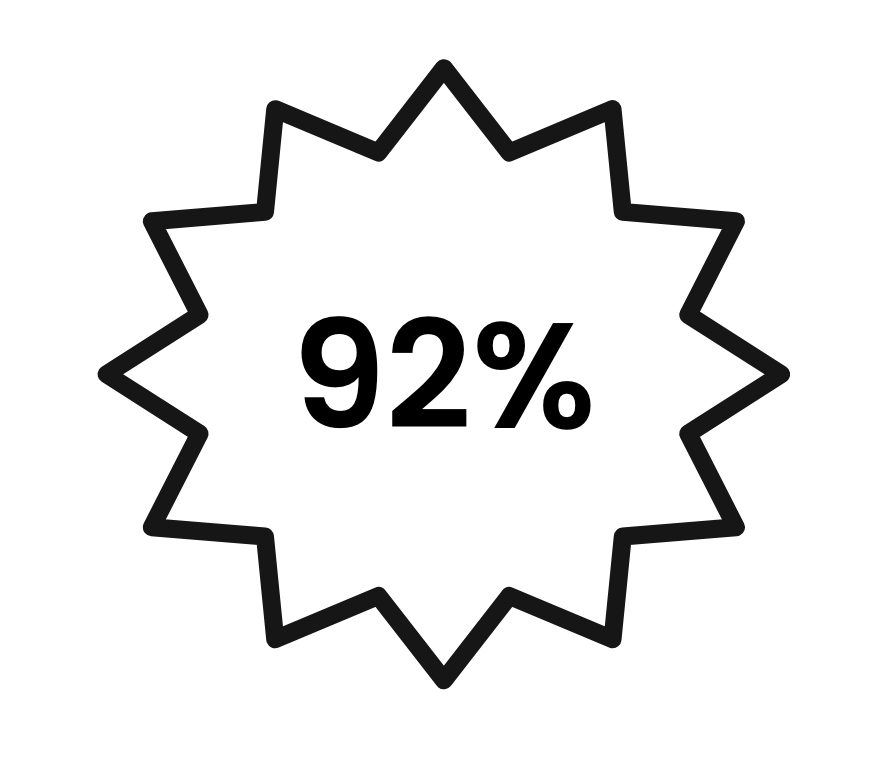
92% CSAT score for participants, 5 % pts higher than the global and 9 % pts above the regional scores.